
The Right Way to Label Moving Boxes: Stop Making These Mistakes!
Table of Contents
- Why Does Labelling Actually Matter?
- What Supplies Do You Actually Need?
- How Can Colour-Coding Keep You Organised?
- How Should You Actually Name Rooms and Boxes?
- How Should Fragile Items Be Labelled?
- Which Boxes Should Be Opened First?
- Where Exactly Should Labels Go on the Box?
- Final Thought
- Frequently Asked Questions
- 1. What’s the best way to label moving boxes?
- 2. Should I label boxes before or after packing?
- 3. How does colour-coding help during a move?
- 4. Where should I place the label on the box?
- 5. How do I label fragile items?
- 6. What should I do with boxes I’m unsure about?
- 7. How do I know which boxes to unpack first?
- 8. Do I need special tools to label boxes properly?
Moving is exhausting, physically and mentally. Your back hurts from all the lifting, and by day three of unpacking, you’re pretty sure you’ve already opened the same box twice looking for a phone charger. Sound familiar? Here’s the good news: there’s one simple habit that can turn all that chaos into something calm and manageable, labelling your moving boxes correctly. Moving with boxes doesn’t have to feel this stressful once you have a system in place.
The problem is, most people don’t really label their boxes, not properly, anyway. They scribble “Kitchen” or “Bedroom” on top in a rush, tape it shut and move on to the next one. It looks like labelling. It isn’t. Because the moment those boxes are piled up in your new living room, that quick scribble stops meaning anything, and you end up hunting through box after box just to find things you need. Choosing the right boxes for moving is only half the job; labelling them properly is what actually makes the difference.
Here’s the thing: the fix isn’t more effort. It’s a smarter effort. Stop labelling boxes just to survive moving day and start labelling for the unpacking instead. Getting into the habit of packing boxes with the end goal in mind changes everything. In this guide, we’ll walk through exactly how to do it right, how to pack, what to write, and where to write it, so your next move-in day is calm instead of chaotic.
Why Does Labelling Actually Matter?
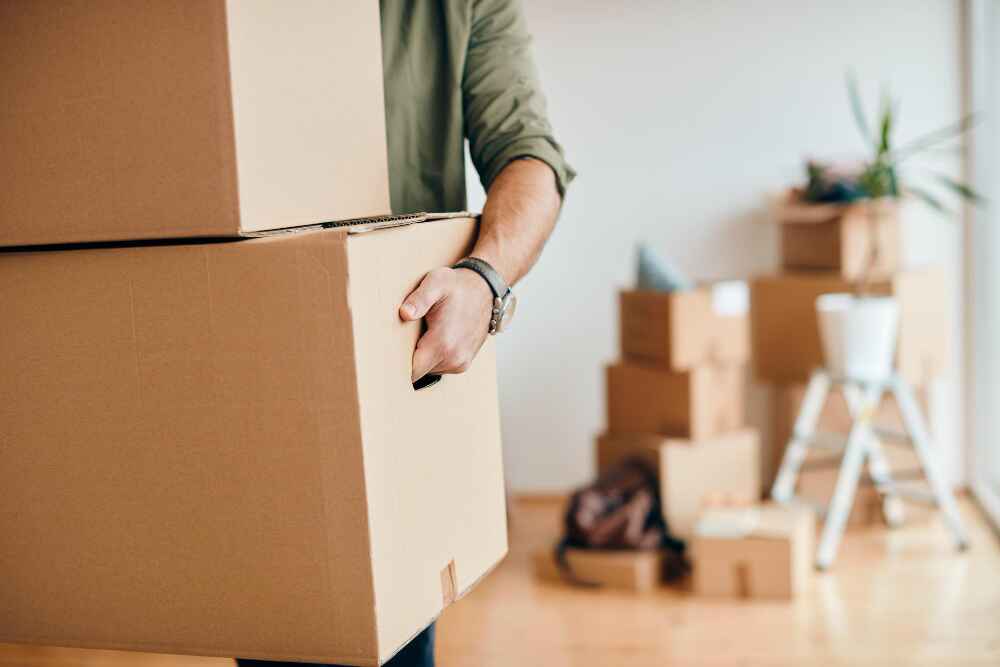
Picture twenty-five identical brown moving boxes stacked in your new living room. No colours, no numbers, no clues about what’s inside. Just plain cardboard. Every single move box looks the same until you add a system to it, and that alone is enough to stress anyone out; it’s exactly what good labelling helps you avoid. It’s also exactly why experienced House Movers Melbourne always ask about your labelling system before the truck even arrives.
When done well, labelling your moving boxes does four important things:
- It tells movers or friends helping you exactly which room each box belongs in – no guessing, no shouting “Where does this go?” across the house.
- It flags fragile items before anyone even lifts the box, so your grandmother’s china doesn’t end up in pieces.
- It makes a missing box easy to spot right away, instead of you realising three weeks later that your winter coats never made it.
- It shows everyone which box to open first, so your first night in the new place feels like a fresh start instead of a scavenger hunt.
What Supplies Do You Actually Need?
You don’t need anything fancy here, just a few basics used the same way on all of your moving boxes.
| Supply | Why It Helps |
| Permanent markers (a few colours) | Writes boldly and won’t smudge or fade during the move |
| Colored packing tape | Helps people spot a box’s room at a glance; no reading needed |
| Paper or sticker labels | A good option if you don’t want to write directly on the box |
| Notebook or notes app | Keeps track of your inventory by box number |
That’s really all you need. No label makers, no complicated tools, just a system you stick with. Whether you’re using new or secondhand supplies, these basics work on any moving box you bring home.
How Can Colour-Coding Keep You Organised?
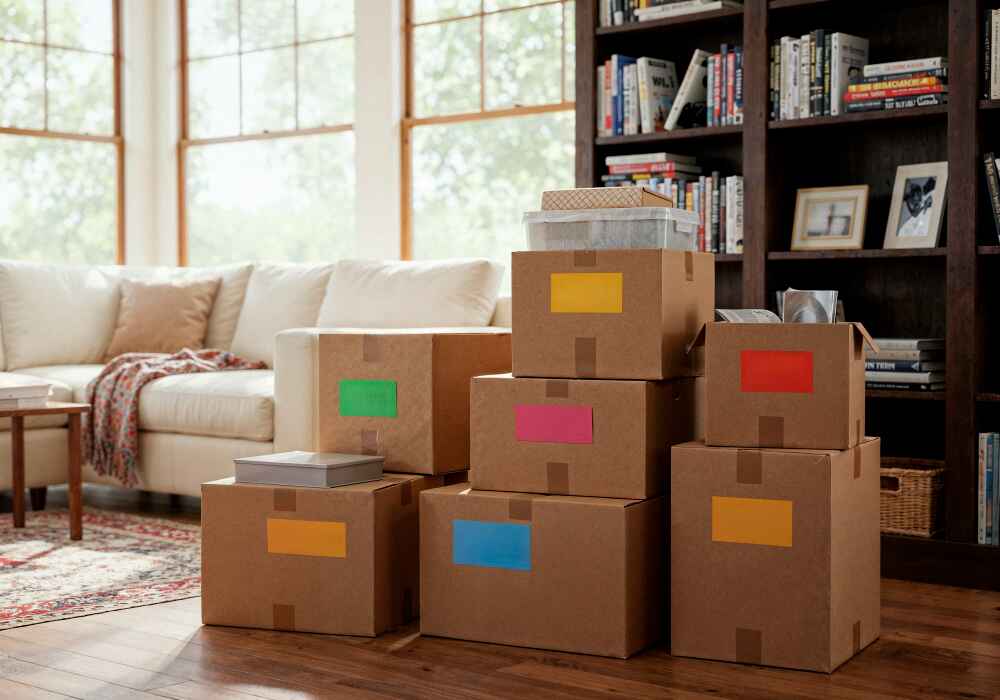
This is the part where labelling actually becomes kind of satisfying. Pick one colour for each room in your new home and stick with it the whole way through.
| Room | Suggested Color |
| Kitchen | Green |
| Bathroom | Blue |
| Bedroom(s) | Red |
| Living Room | Yellow |
| Office | Orange |
| Garage/Storage | Purple |
Wrap a strip of that colour-coded tape around each side of the matching box. Then, here’s the trick: tape the same colour on the door frame of that room in your new house. Movers, whether they’re professionals or just a friend with a truck, won’t even need to read anything. They can just match the tape colour to the door colour, set the box down, and keep going. This way, moving a box into the correct room becomes an automatic, no-brainer task for anyone helping you. It’s quick, it works every time, and it keeps boxes from ending up in the wrong room, which is exactly why professional House Removalists rely on systems like this every single day.
How Should You Actually Name Rooms and Boxes?
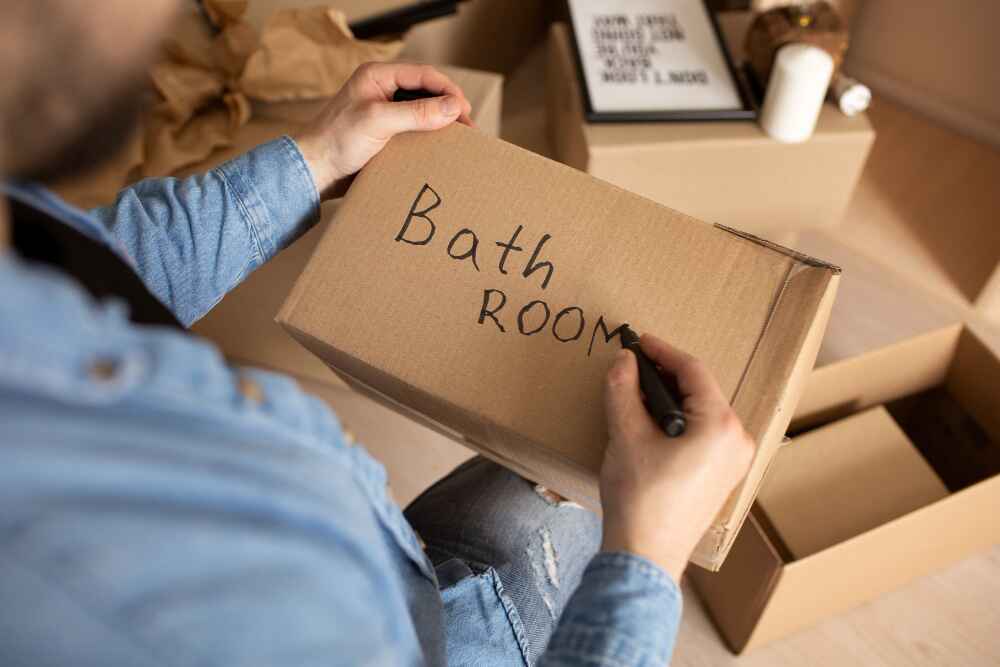
Vague labels don’t help anyone. “Bedroom” works fine if you live alone in a studio apartment. But if you’ve got three bedrooms, it tells you nothing about which one has your pillows. Be specific instead: “Master Bedroom“, “Kid’s Room“, “Guest Room“, “Home Office“.
Go one step further and number each of your moving boxes – 1, 2, 3 and so on, then keep a simple list on your phone or in a notebook describing what’s inside each one. Need your charger at 11 p.m. on move-in night? Just check the list, see “Box 14, chargers, cables, remote controls”, and grab it directly. It only takes a few extra seconds while packing, but it saves you hours later. This small habit makes moving in boxes so much easier to track once you’re settled in.
Also Read: DIY Packing Tips and Tricks for a Smooth Move in Australia
How Should Fragile Items Be Labelled?
Breakable items need their own system. Plates, glasses, lamps, mirrors, and anything that could shatter if handled roughly should stand out clearly from every other box in the room.
Use one colour of tape just for fragile moving boxes; bright orange works well since it’s unlikely to be used for anything else. Then write “FRAGILE” or “THIS SIDE UP” in big, clear letters on at least two sides. The goal is simple: nobody, not you, not the movers, not your well-meaning cousin, should pick that box up without immediately knowing it needs careful handling.
Which Boxes Should Be Opened First?
Not every box needs to be treated the same way. Sorting boxes by priority means you won’t be digging through everything just to find the basics.
| Priority Level | What Goes In It | When You’ll Need It |
| High Priority | Toiletries, toilet paper, bed sheets, chargers, a change of clothes | Night one |
| Medium Priority | Extra clothes, basic kitchen tools, and cleaning supplies | First week |
| Low Priority | Decorations, books, seasonal items, keepsakes | Whenever you get to it |
Mark high-priority boxes in a way that’s easy to spot; a bright sticker or a big star works well so they’re the first ones off the truck and the first ones opened. There’s nothing worse than finishing a long moving day and not being able to find a single towel.
Where Exactly Should Labels Go on the Box?
Here’s a mistake almost everyone makes: writing the label only on top of the box. It feels like the natural spot, but it stops working the moment boxes get stacked, which they always do. A label on top disappears as soon as something else sits on it.
Two easy fixes:
- Label the Sides, Not Just the Top: Label at least two sides so you can read it no matter how the box ends up facing in a stack.
- Stick to the Upper-Half Rule: Write in the top half of the box’s side. If your label is too low, it’ll get blocked by whatever box is sitting underneath it.
It’s a small change, but it makes a big difference; you’ll be able to scan a room and know what’s what instead of having to shuffle boxes around just to read a label. Getting comfortable moving with boxes stacked this way makes the whole process feel far less overwhelming.
Final Thought
None of this takes special skills or expensive tools, just a bit of intention. Pack a box, seal it, then give it a colour, a number, a room name, and, if needed, a fragile warning and a priority level. That’s the whole system. It adds maybe thirty seconds per box, but it pays off big time the moment you’re standing in your new home, trying to find anything literally.
Moving will always take some effort; no labelling system makes carrying a couch up three flights of stairs easy. But not knowing what’s inside your boxes? That part is completely avoidable. Spend a little extra time on smart labelling today, and your move-in day tomorrow will feel a lot more like organising a filing cabinet than digging through a treasure hunt. Investing in sturdy boxes for moving and labelling them well is the easiest win in your entire move. House Movers Melbourne professionals like Team Removals Australia can take the stress off your shoulders entirely.
Read More: 6 Proven Ways to Settle Into Your New City After Your Move
Frequently Asked Questions
1. What’s the best way to label moving boxes?
Pack the box, seal it, then label it right away with the room name, a box number, and the contents – written on at least two sides. This way, every moving box is easy to identify at a glance.
2. Should I label boxes before or after packing?
Always after. Label only once the box is sealed, so the label matches what’s actually inside.
3. How does colour-coding help during a move?
Each room gets its own tape colour. Match that colour to a matching strip on the new room’s door, and movers can place boxes correctly without reading anything.
4. Where should I place the label on the box?
On at least two sides, in the top half of the box. Labels on top or too low get hidden once boxes are stacked.
5. How do I label fragile items?
Use a separate tape colour (like orange) just for fragile boxes, and write “FRAGILE” or “THIS SIDE UP” clearly on two sides. This warns anyone moving a box to handle it with extra care.
6. What should I do with boxes I’m unsure about?
Avoid writing “Misc.” Label them “To Be Decided” instead; it’s more likely to get opened and sorted later.
7. How do I know which boxes to unpack first?
Sort boxes by priority, high (night one essentials), medium (first week), and low (things that can wait) and mark high-priority boxes clearly. This keeps moving in boxes from turning into a stressful guessing game.
8. Do I need special tools to label boxes properly?
No. Just permanent markers, coloured tape, stickers or paper labels, and a notebook or notes app to track box numbers.

 Rating